If you have an hour (okay, an hour and six minutes) to spare, then I want to tell you a story. I promise, it’s a good one.
It’s the story of an organization that came up with a product.
A product that was useful.
So useful, in fact, that it became an incredible financial success… and completely transformed the fiscal fortunes of the organization that created it.
And along the way, as more money flowed to the organization, instead of saying “mission accomplished,” the gravitational pull of all those dollars was so strong that it made it easy for the organization’s leadership to look the other way and continue extracting more and more cash from some of the most vulnerable members of the community that the organization exists to serve.
It’s a story about Application Fever and financial conflict of interest and mission creep and coercive monopolies. I think it’s an important story, and I hope that, by the end, it makes you think a little bit, too.

Among other things, we’ll cover:
How ERAS revenue transformed the AAMC…
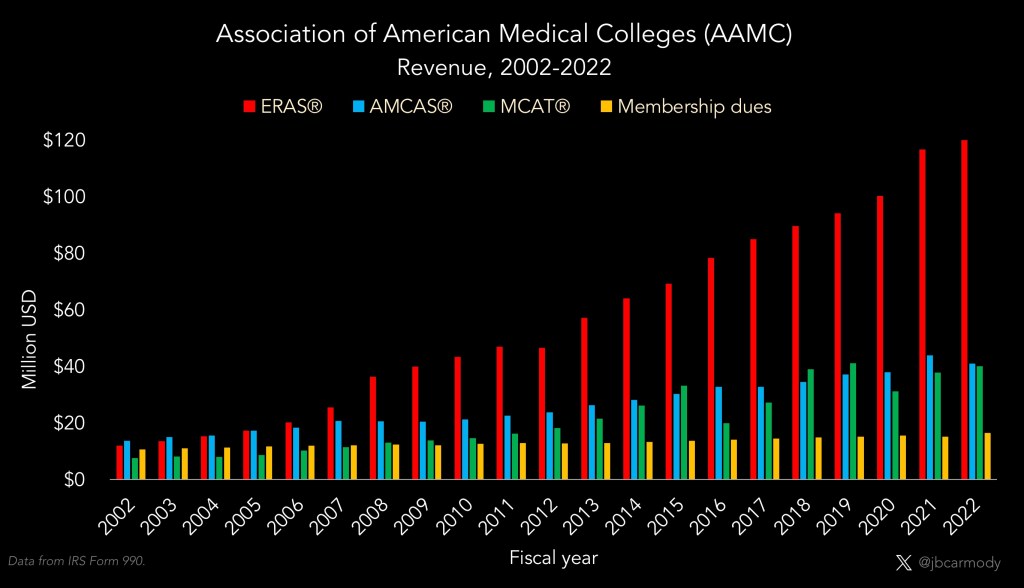
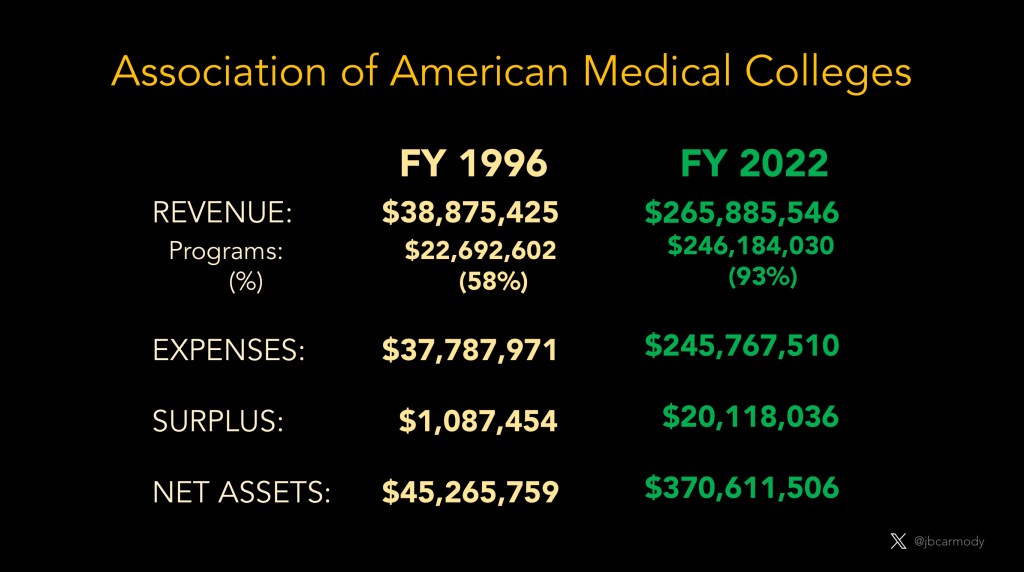


…and helps fund over $100 million of the AAMC’s pet projects with no revenue of their own.
–
We’ll look at the original rationale for a tiered fee structure in ERAS…
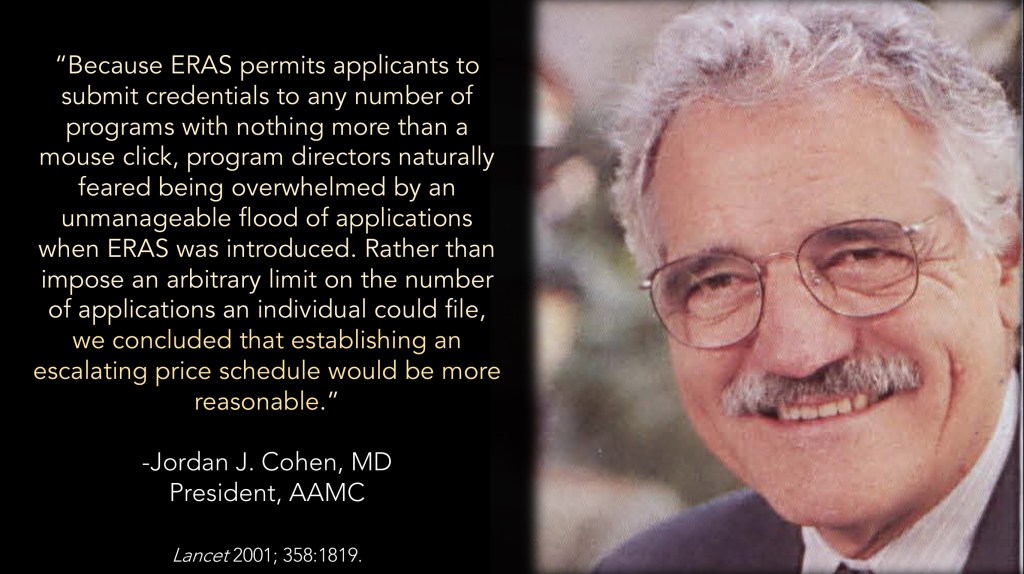

…and how the AAMC progressively removed any significance between the tiers to reduce the psychological barrier of overapplication.
–
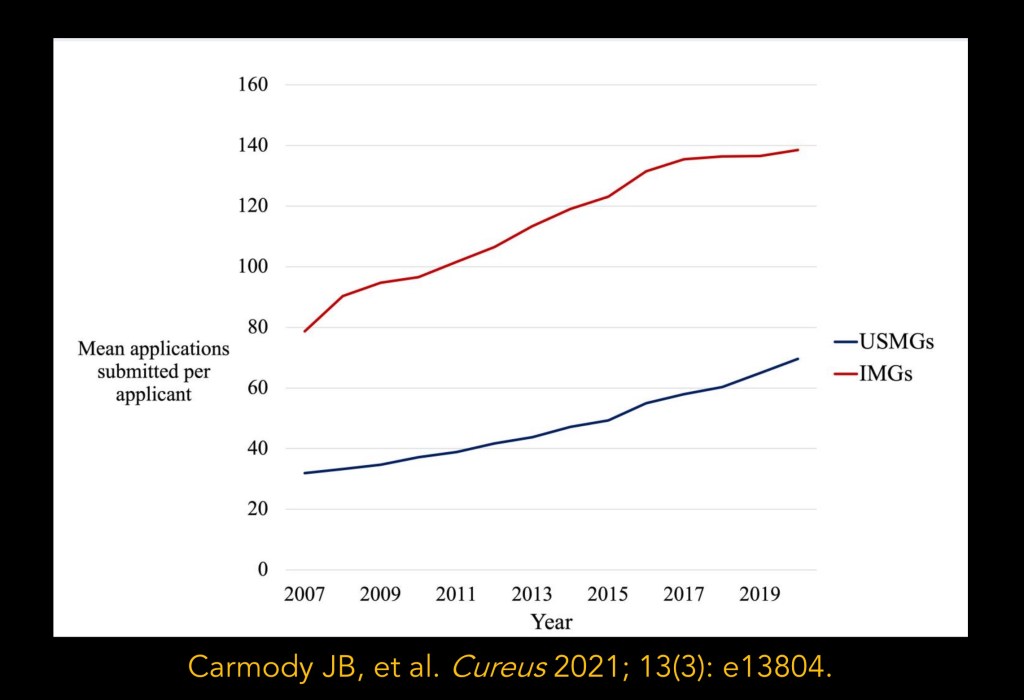
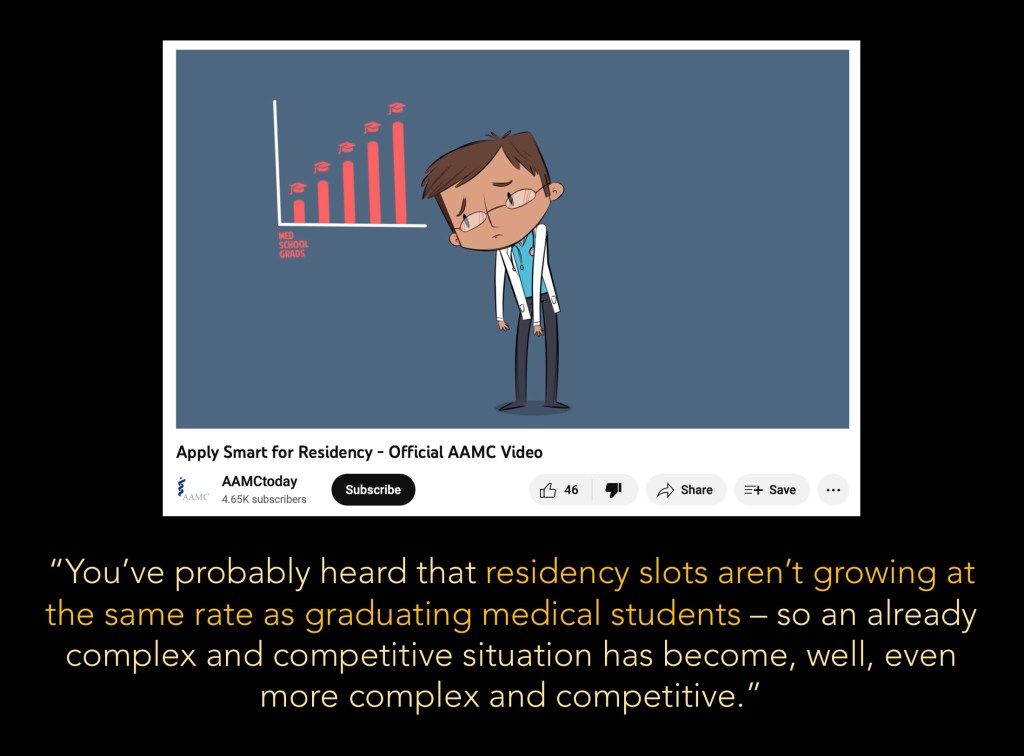
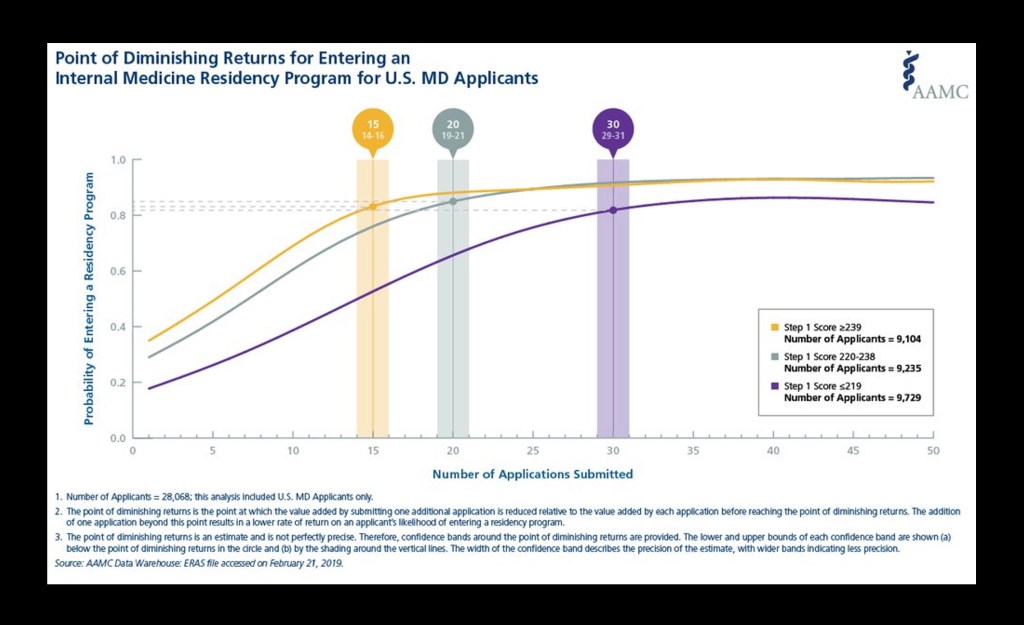
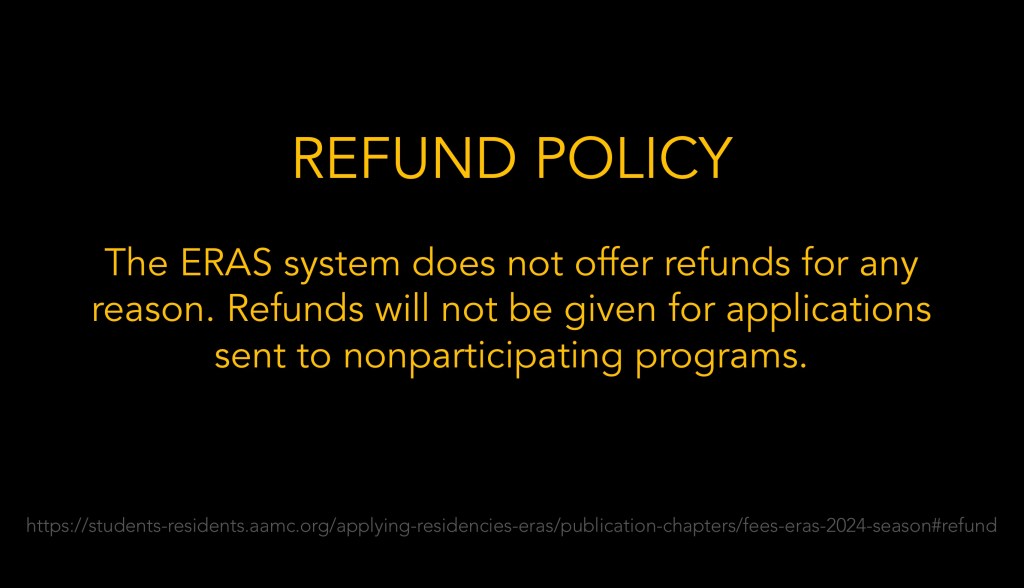
We’ll discuss why the AAMC’s messaging, policy decisions, and data reporting are problematic – and served to stimulate more overapplication.



–
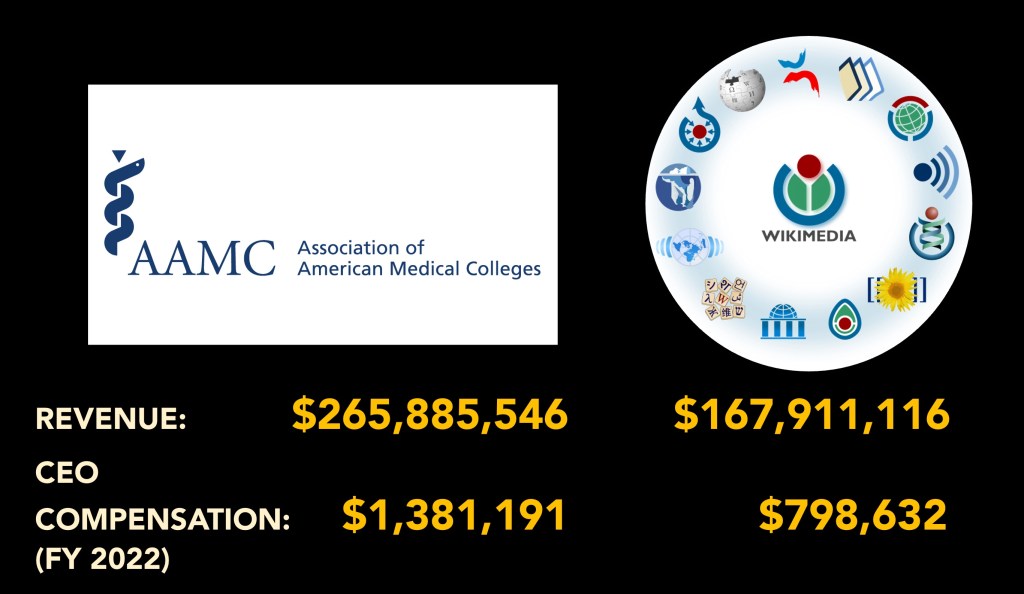
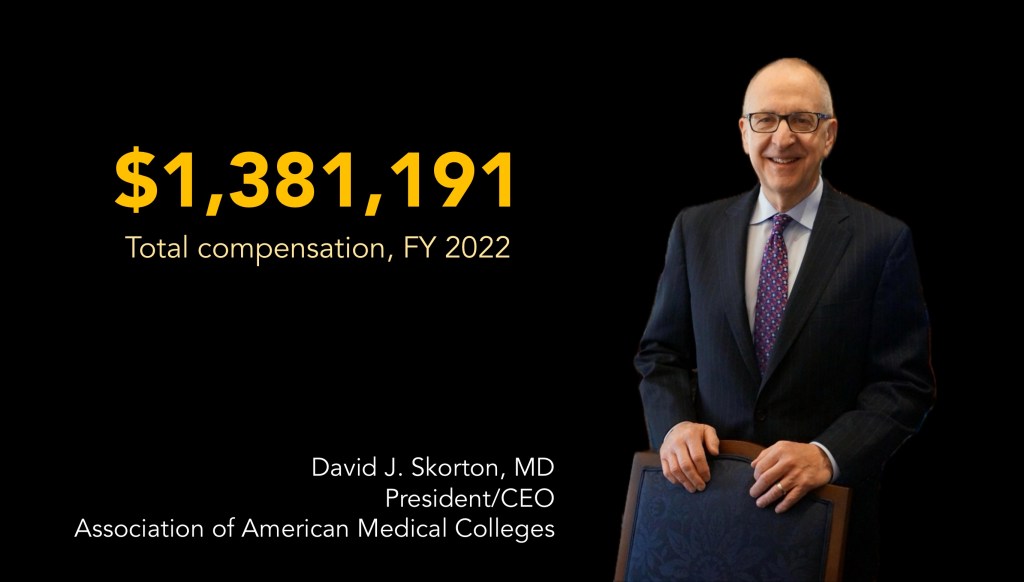
And I’ll explain why a financial conflict of interest exists, and how much the AAMC has benefitted.

–
And if all that doesn’t convince you, just check out these rave reviews!

–
YOU MIGHT ALSO LIKE:
Applying Smarter, Part 1: Breaking Down the AAMC’s Apply Smart Campaign

 The Sheriff of Sodium