Every two years, the National Resident Matching Program releases new Charting Outcomes in the Match reports. This year, we got three new reports, providing nearly 800 pages of data on how applicant qualifications influence match outcomes for MDs, DOs, and IMGs. There’s a lot to unpack.
So you know what that means.
Yup, that’s right.
It’s time to break it down, Winners & Losers™️ style.
(Running time – 44:28)
Among other things, we’ll cover:
the current state of the research arms race in residency selection
are ophthalmology and/or urology data coming to the NRMP?
just how 🔥 is anesthesiology right now?
why the future of the pediatrics match is worse than you thought
trends in IR vs. DR; PM&R; pathology; and radiation oncology
do dual degree applicants (MD-MPH, MD-MBA, etc.) benefit – or suffer – in the match?
should applicants apply to more than one specialty?
anti-DO bias
…plus some fun and interesting things about statistics and data interpretation in general.
–
Some screenshots/figures below:
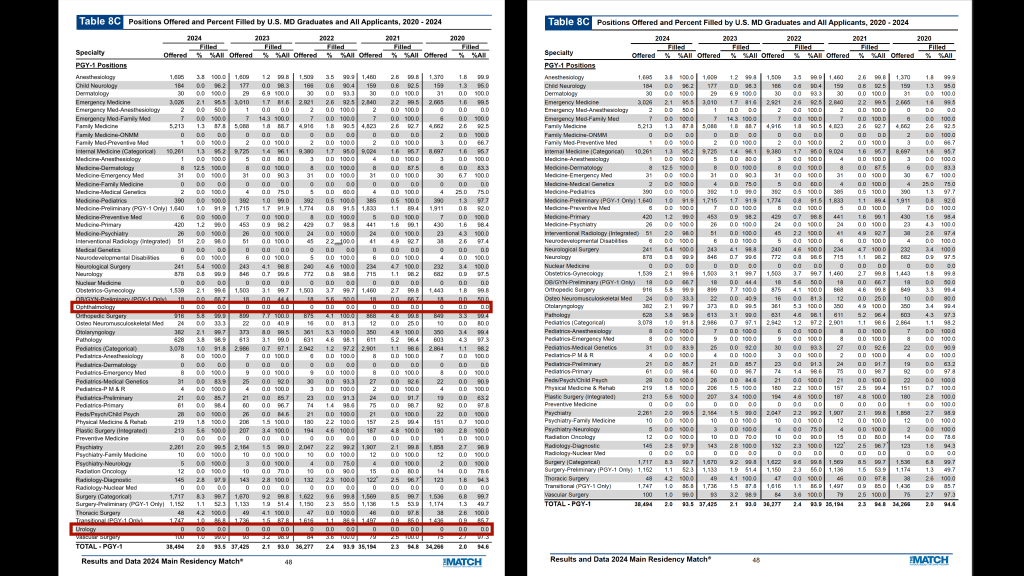
The 2024 NRMP Match Report initially included a number of tables that listed urology and ophthalmology… which were removed in the version that was later posted.
–
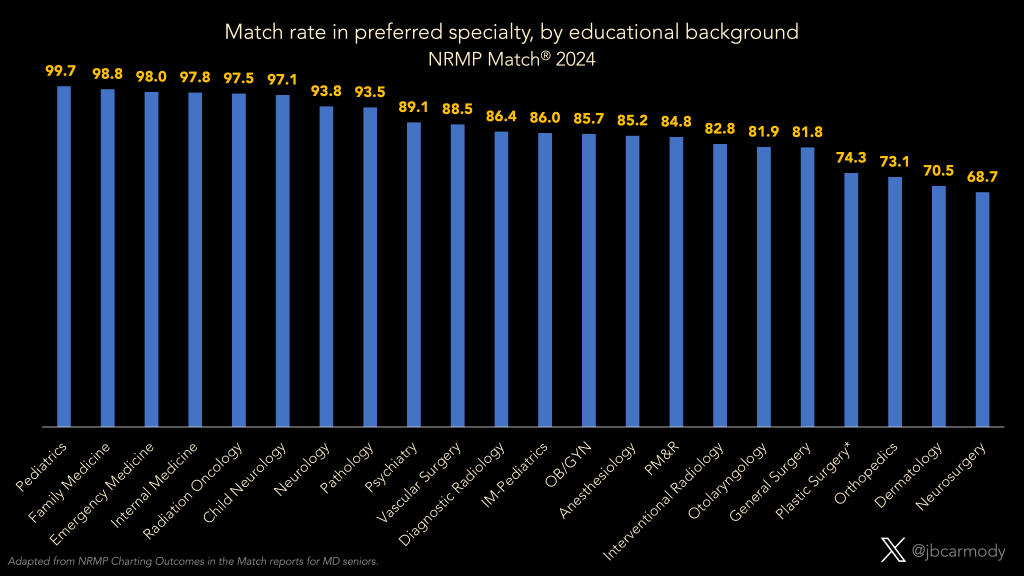
Match rates for graduating MD students in 2024.
–
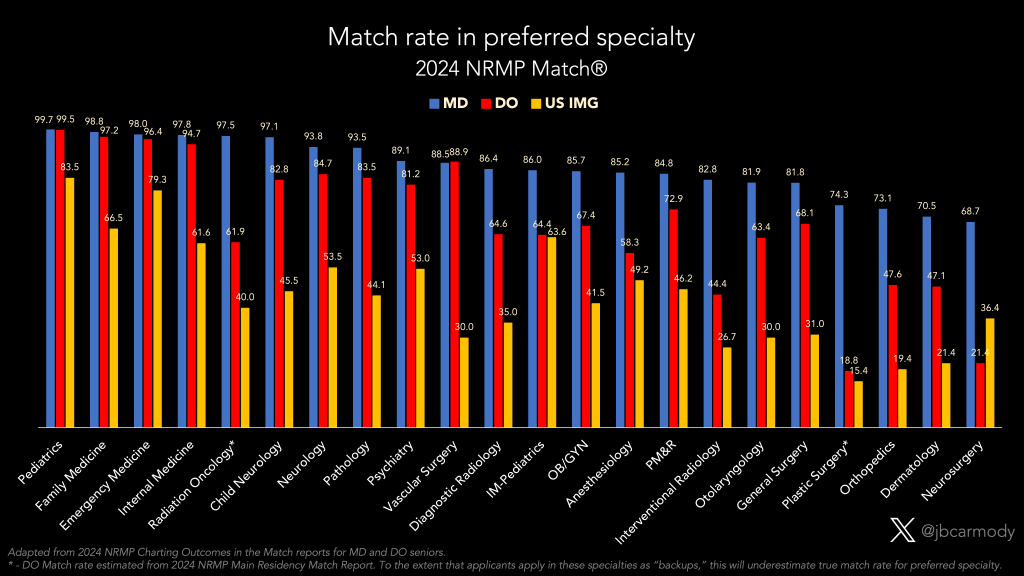
Match rates for graduating MD and DO students in 2024. For less competitive specialties, match rates are similar… but the more competitive the specialty, the greater the difference between match rates for MDs and DOs.
–
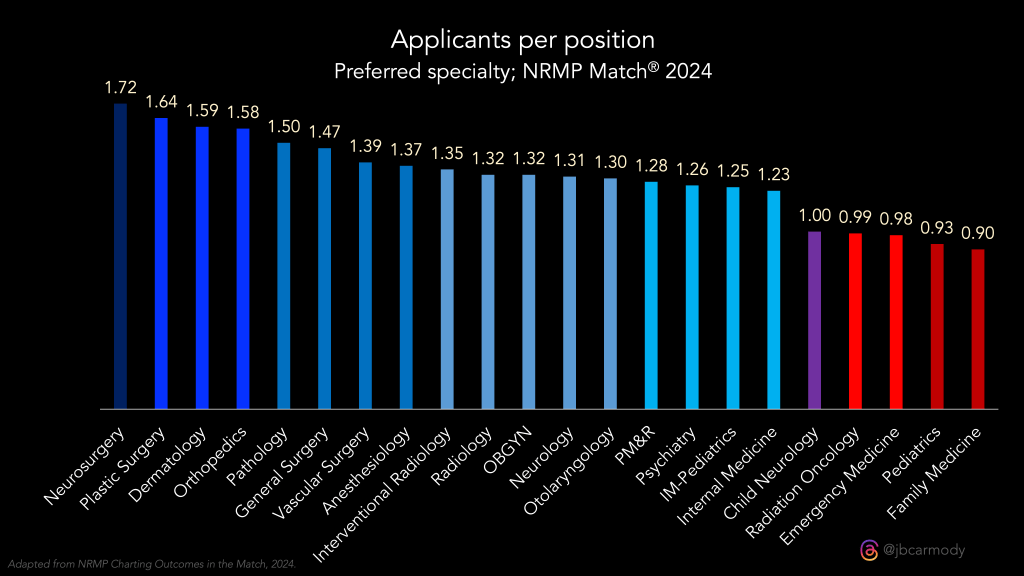
Only four specialties receive <1 applicant per position – and both pediatrics and family medicine receive significantly fewer preferred applicants than positions offered.
–
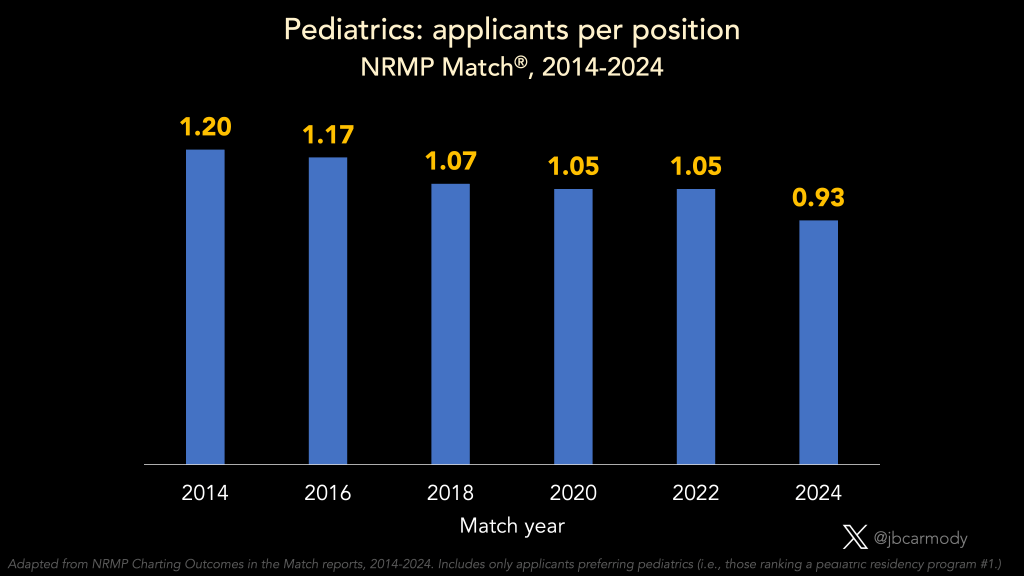
Interest in pediatrics has declined substantially over the past decade.
–
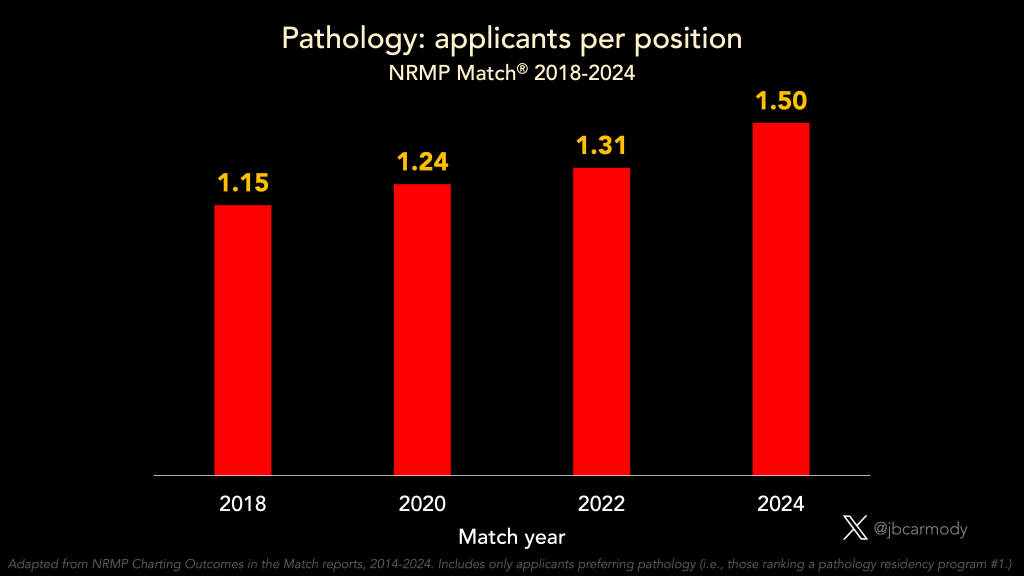
In contrast, pathology has become more sought-after.
–
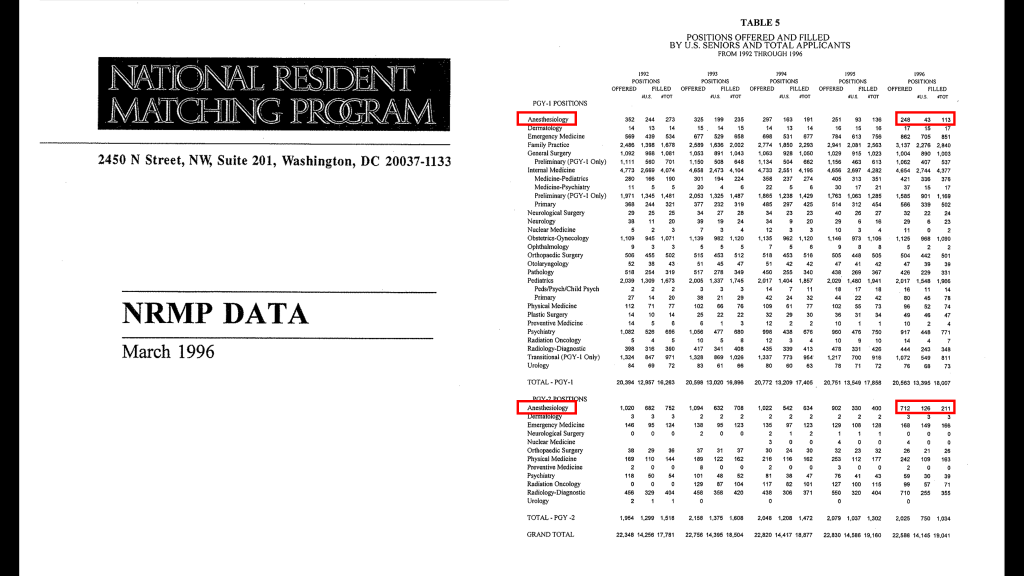
In 1996, nearly two thirds of anesthesiology positions didn’t fill.
–
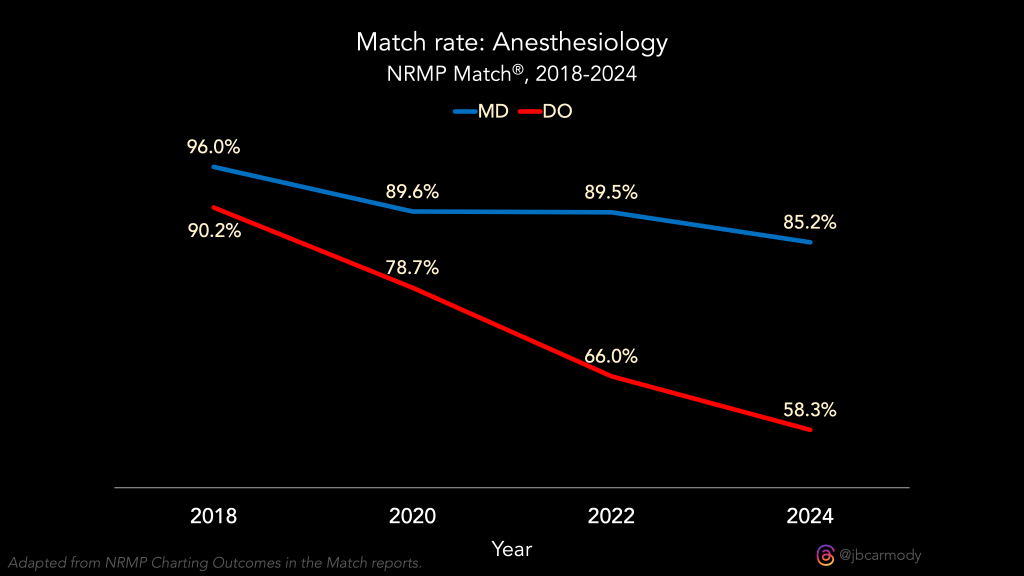
But last year, 100% of anesthesiology positions filled in the Match. Match rates have dropped as the specialty has grown increasingly popular.
–
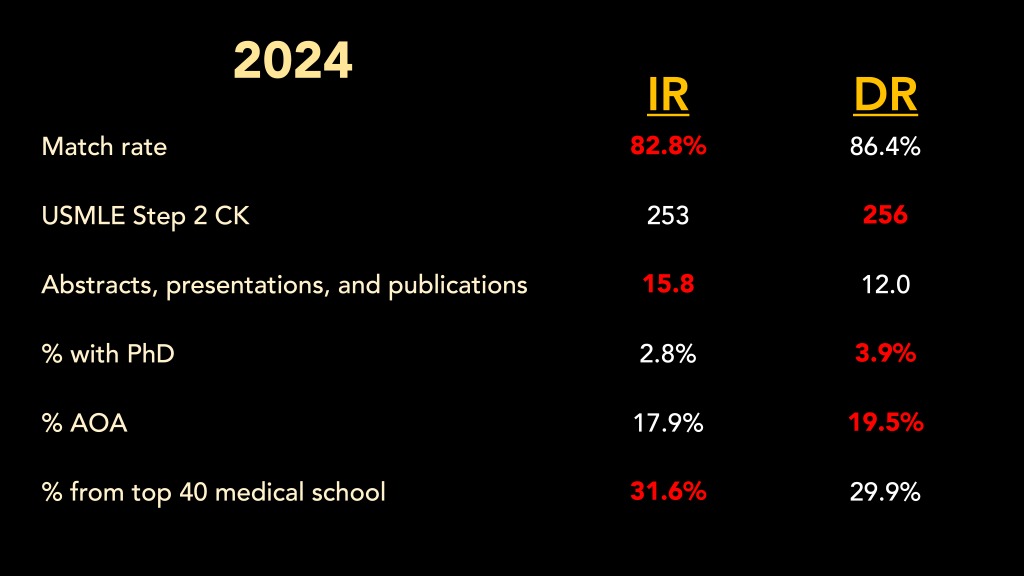
Many applicants apply to both interventional and diagnostic radiology programs – but recently, many of the most accomplished applicants have preferred DR to IR.
–
Over 40% of matched dermatology applicants were members of AOA. Over 40% graduated from a ‘Top 40’ medical school, too.
–
U.S. citizens who choose to attend medical school overseas face longer odds of matching in every specialty.
–
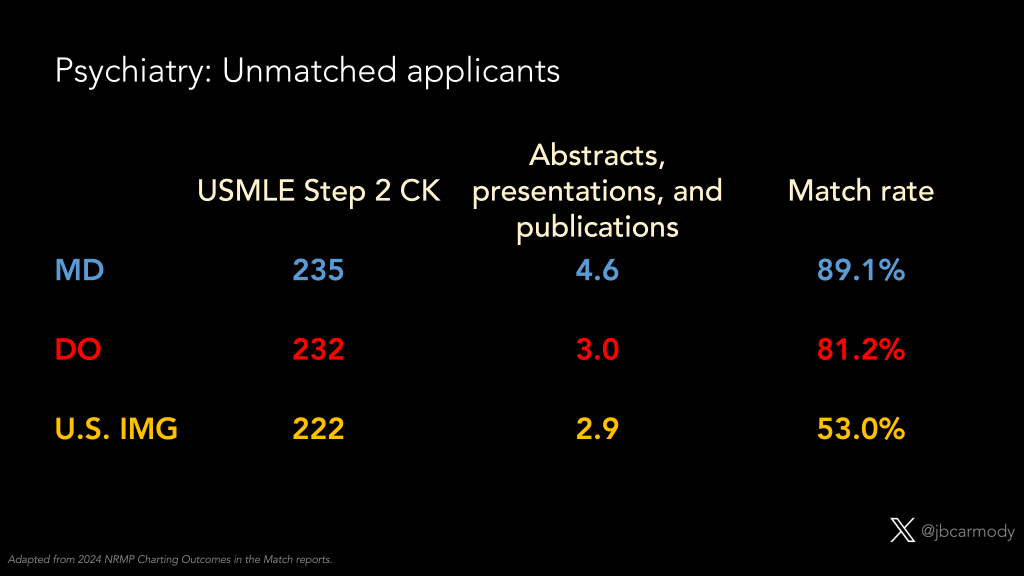
Differences in match outcomes for MDs, DOs, and US citizen IMGs are mediated by differences in their credentials.
–
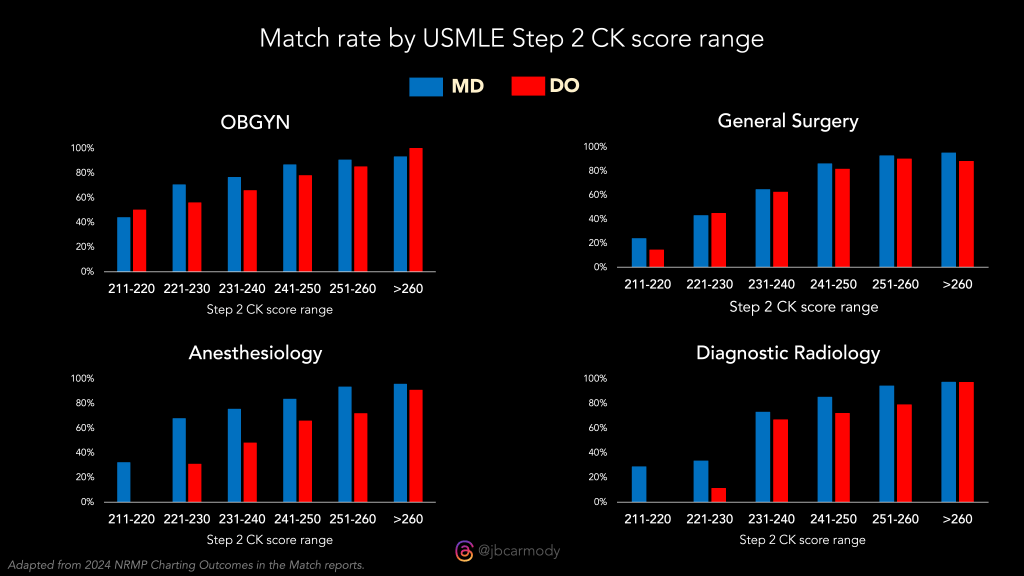
At the same approximate level of USMLE performance, DO applicants have slightly lower match rates.




 The Sheriff of Sodium