Whenever I discuss preference signaling on social media, one of the first replies is always “Wait – what’s that?”
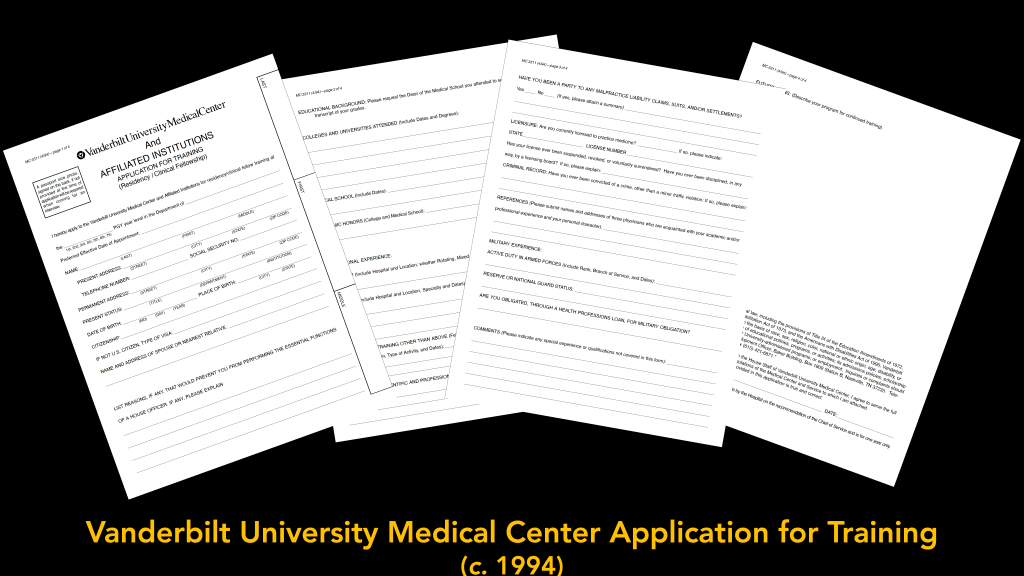
In the olden days, when an applicant was interested in a particular residency program, they demonstrated that interest in the most adorably quaint and old-fashioned manner possible: they sent them an application.
Once upon a time, applying to residency programs was a process that involved paper, typewriters, and snail mail.
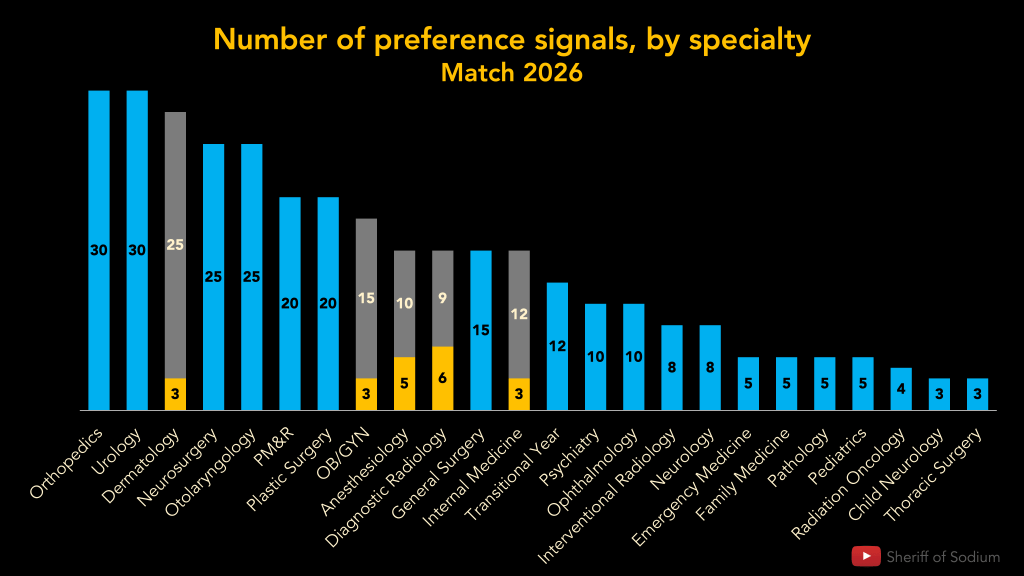
But beginning with otolaryngology in 2020-2021, formal preference signaling has taken off. Now, nearly every specialty allows applicants to send signals to a limited number of programs to demonstrate their serious interest.
Preference signaling in the 2025-2026 residency application cycle.
The signaling landscape in residency selection has grown increasingly complex. Depending on the specialty, applicants may receive as few as 3 or as many as 30 signals, and some fields use a tiered system in which applicants must allocate both gold and silver signals. On top of that, applicants in many specialties can also indicate their interest in training in up to 3 geographic regions or certain physical settings (urban vs. suburban vs. rural).
All told, preference signaling has become the new high-stakes meta game in residency selection. Applicants who signal wisely will gain advantage; applicants who don’t will suffer.
So if you’re an applicant who wants to understand how to allocate your preference signals in the most effective manner possible – well, have I got a video for you.
(Running time – 1:12:13)
–
Now, I know what some of you are thinking: who has time for a 72 minute YouTube video?
If you want the CliffNotes version, I laid out the basic logic here when I covered this topic in 2023. But this year’s video contains updated facts and figures, some additional historical perspective, and more detailed discussion of some of the logical principles.
Here’s a small tasting platter:
–
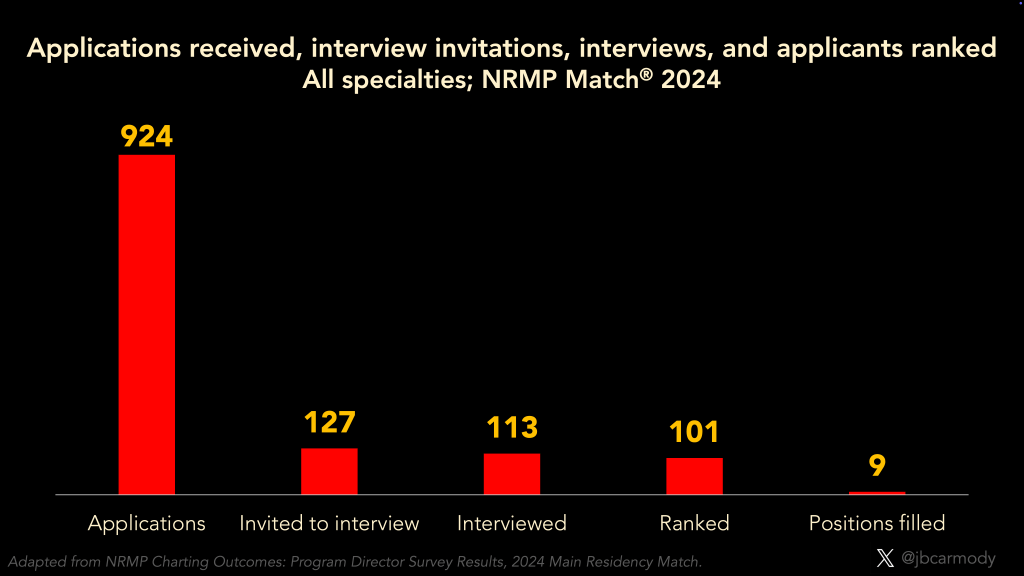
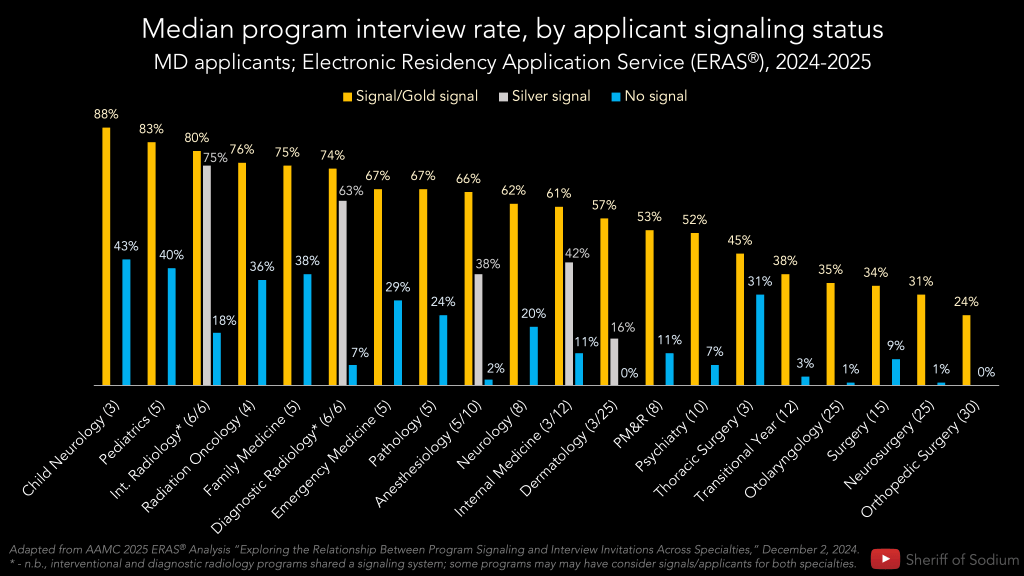
A signal’s value depends on its ability to increase the likelihood of receiving an interview offer (which is the tightest wicket to squeeze through in the residency selection process).
–
The more signals allowed, and the more competitive the field, the less likely non-signaled applications are to result in an interview offer.
–
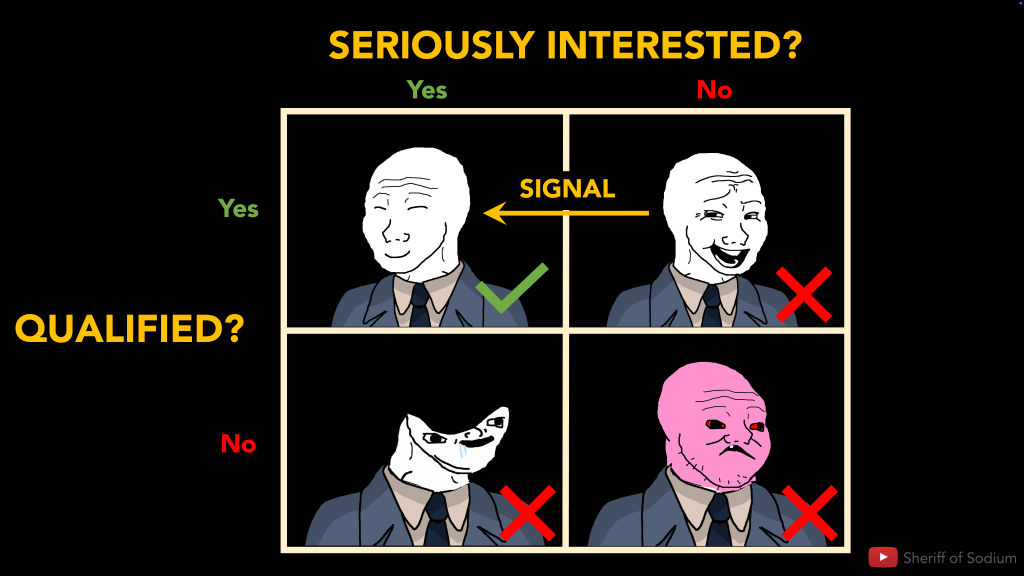
Signals help an applicant demonstrate serious interest in a program, and can help a qualified-but-not-obviously-interested applicant secure an interview invitation. But signaling won’t make an unqualified applicant more qualified.
–
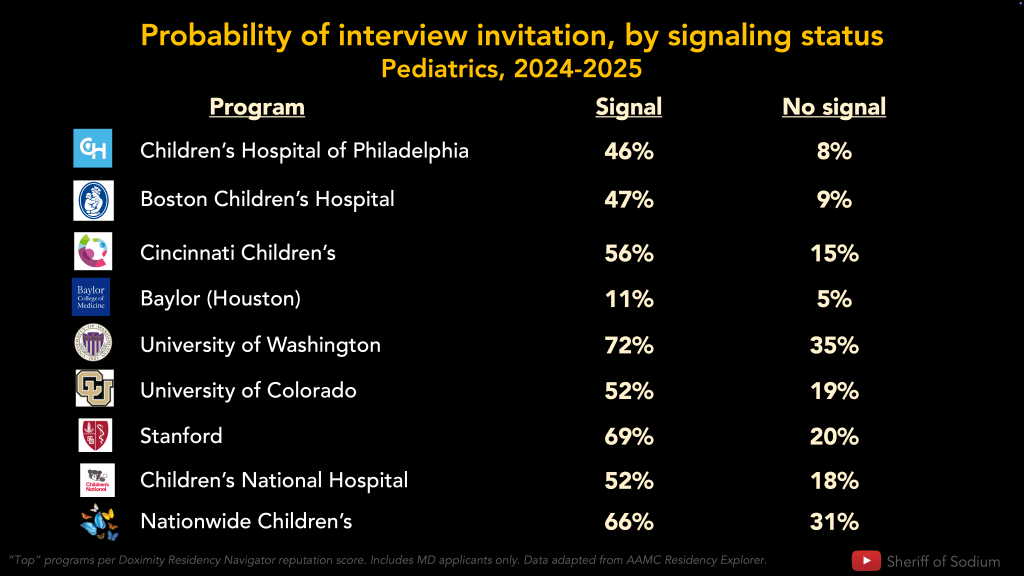
For specialties with low signaling numbers like pediatrics (n=5), signals may turn into aspirational tokens.
–
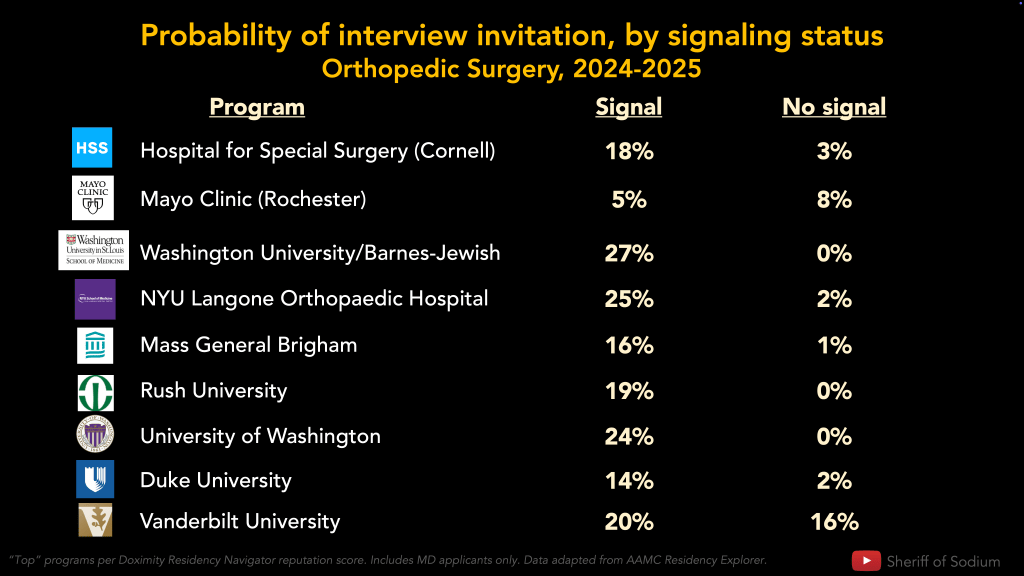
In “big signaling” specialties like orthopedic surgery (n=30), failing to signal effectively excludes an applicant from further consideration at most programs. Statistics that, on first pass, suggest otherwise may not apply to your particular scenario.
–
Big Name Programs receive so many signaled applications that there’s no need to consider non-signaled applications.
–
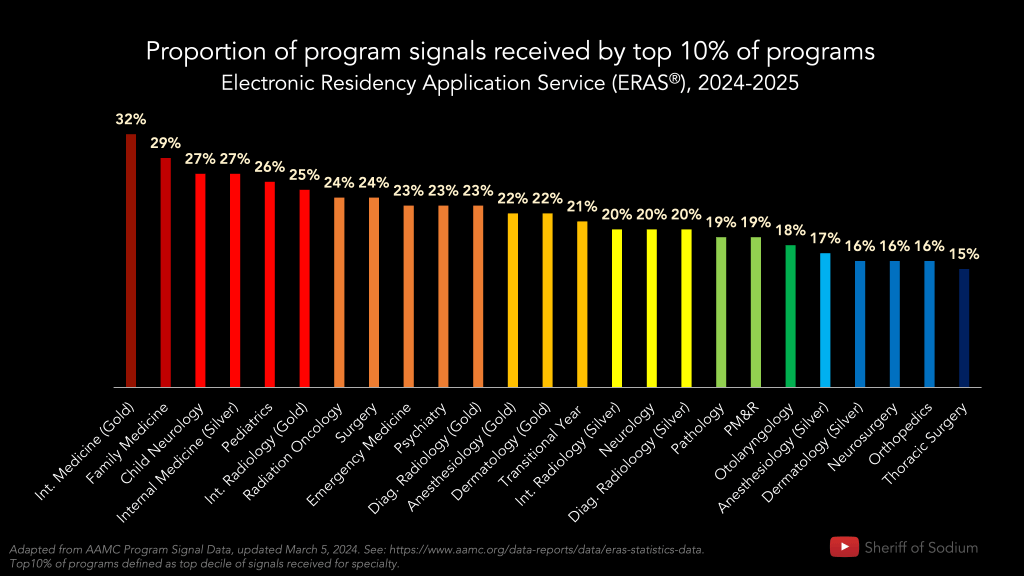
Signals are not distributed evenly among programs. If you’re serious about being considered at a Big Name program (or at any program in a big signaling specialty), sending a signal is the table stakes.
–
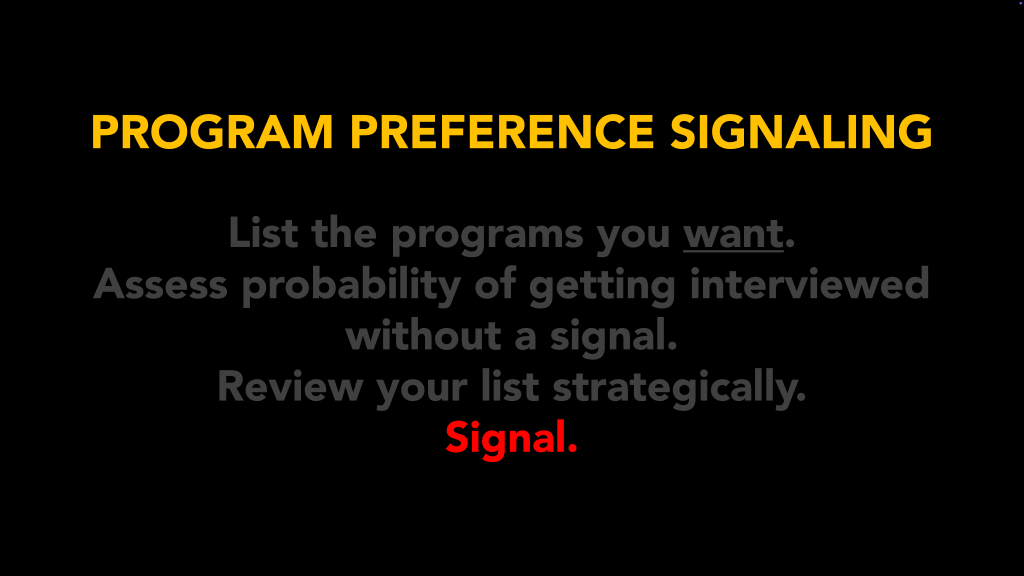
The optimal signaling strategy is circumstance specific, and requires consideration of your own values and risk tolerance as well as game theory.
–
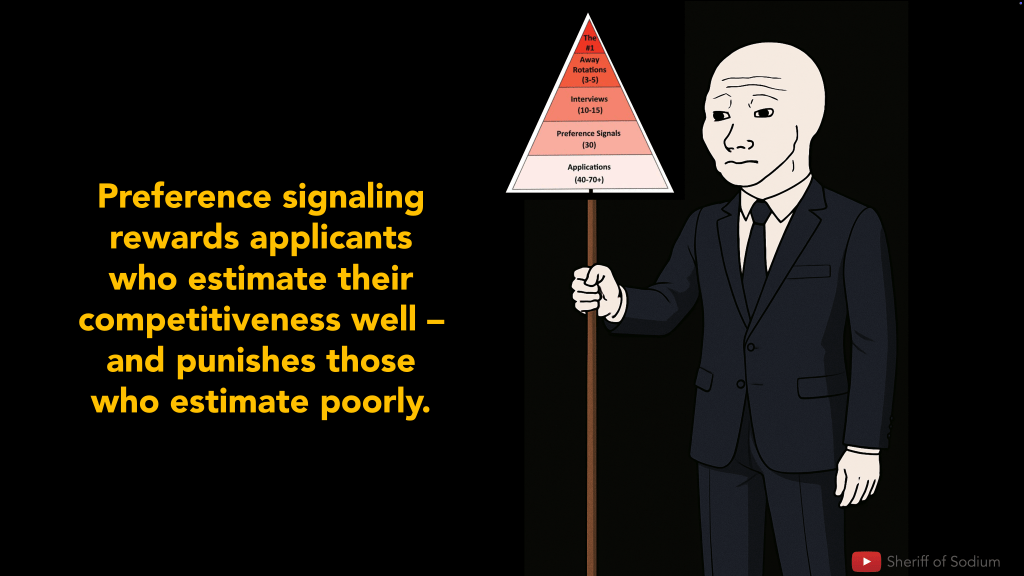
Some applicants will gain advantage from signaling. Others won’t. And what separates one group from another is their ability to correctly estimate their competitiveness at the programs they choose to signal.
–
If they are so inclined, an applicant can avail themselves of the preference signaling system in multiple specialties. A dermatology applicant who thinks they could find that perfect blend of medicine and procedures in anesthesiology will get 15 signals – just the same as an applicant who only ever wanted to be an anesthesiologist.
–
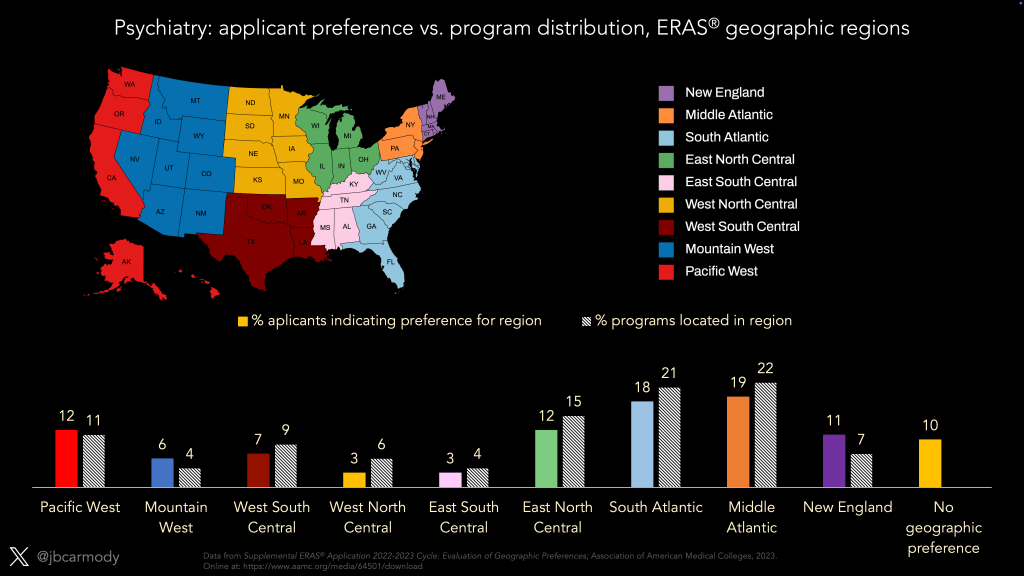
Most specialties also allow applicants to identify up to 3 geographic regions of interest. The description of why a region was chosen should be credible, compelling, and broadly applicable to all the programs in that region.
–
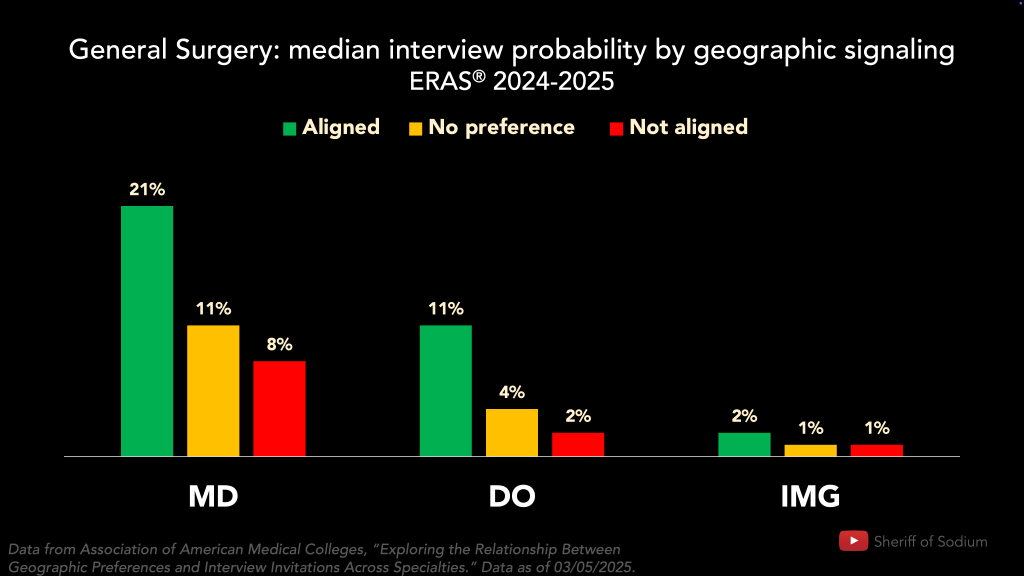
There’s an interview boost when geographic regions are aligned with the program location, and a penalty when they aren’t, with applicants who assert that they have “no geographic preference” falling in between.
–
Programs are not evenly distributed among ERAS regions. Neither is applicant interest in those regions.
–
If you take the geographic signaling data at face value, applicants who truly have no geographic preference may be better off by identifying 3 regions of interest.
–
Should couples applying in different specialties send their signals to the same set of programs – or try to generate backdoor interview offers by applying to distinct sets? For both couples and any other applicant at risk of going unmatched, it’s better to create more high-value opportunities than just opportunities in general. One quarter is more than two dimes and a nickel.






 The Sheriff of Sodium