Another residency application season is about to kick off… which means that it’s time for applicants to make what’s become one of the highest-stakes decisions in their careers to date: where to signal.
And that means it’s time for me to update my advice on how to deploy your preference signals strategically.
(Running time – 1:15:10)
_
Some teasers…
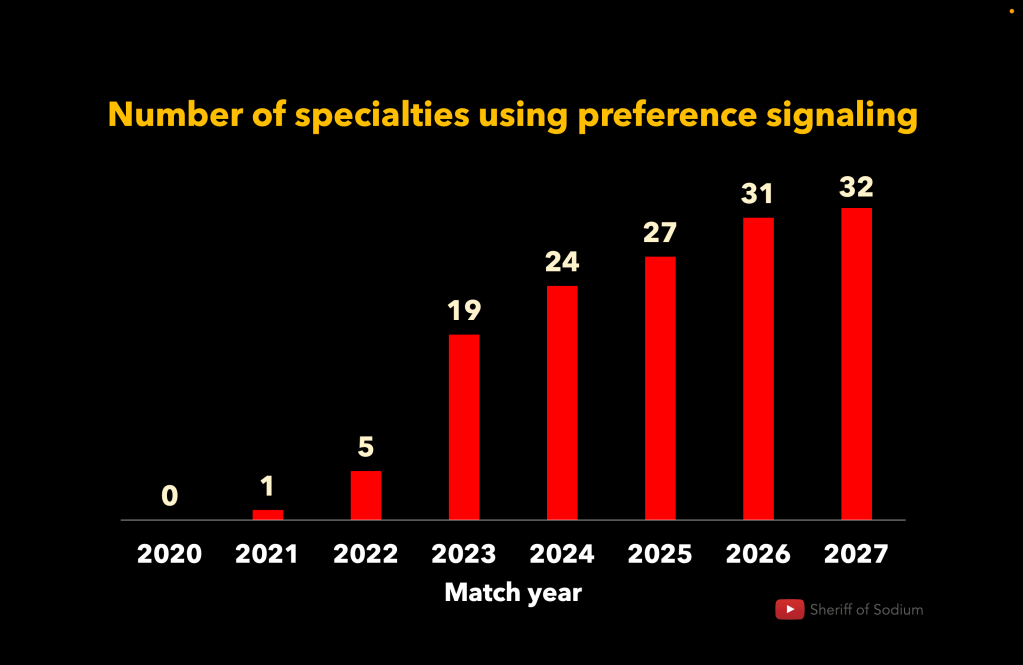
Preference signaling has rapidly transformed into the default architecture for residency selection. In the 2027 Match, every single mainstream specialty will use preference signaling.
–
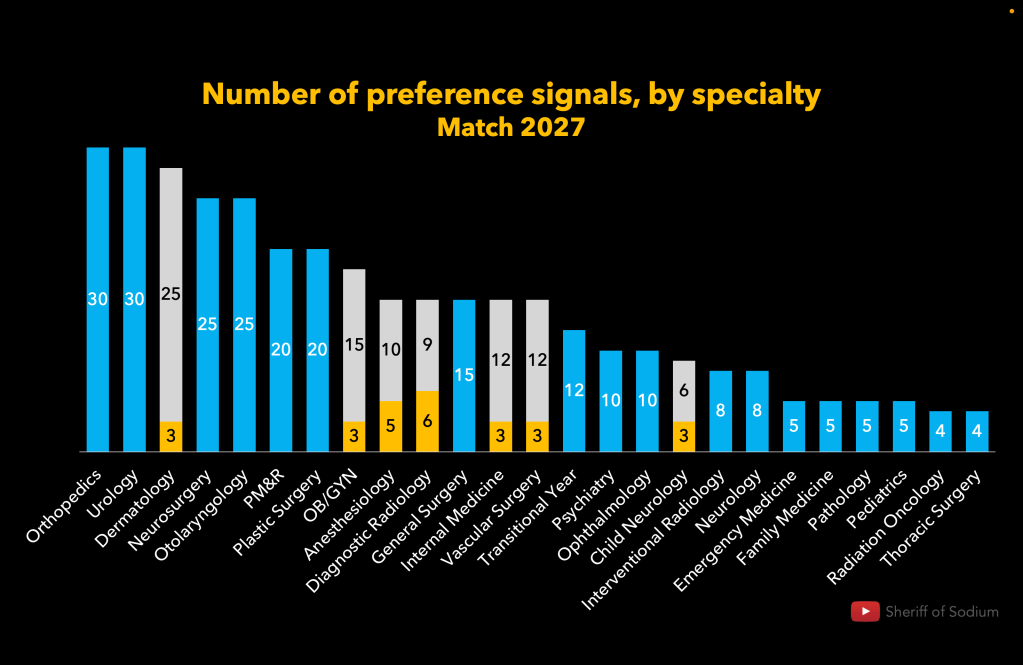
Preference signaling in the 2027 Match. Different specialties allow different numbers of signals; some specialties use tiered (gold/silver) signaling systems as well.
–
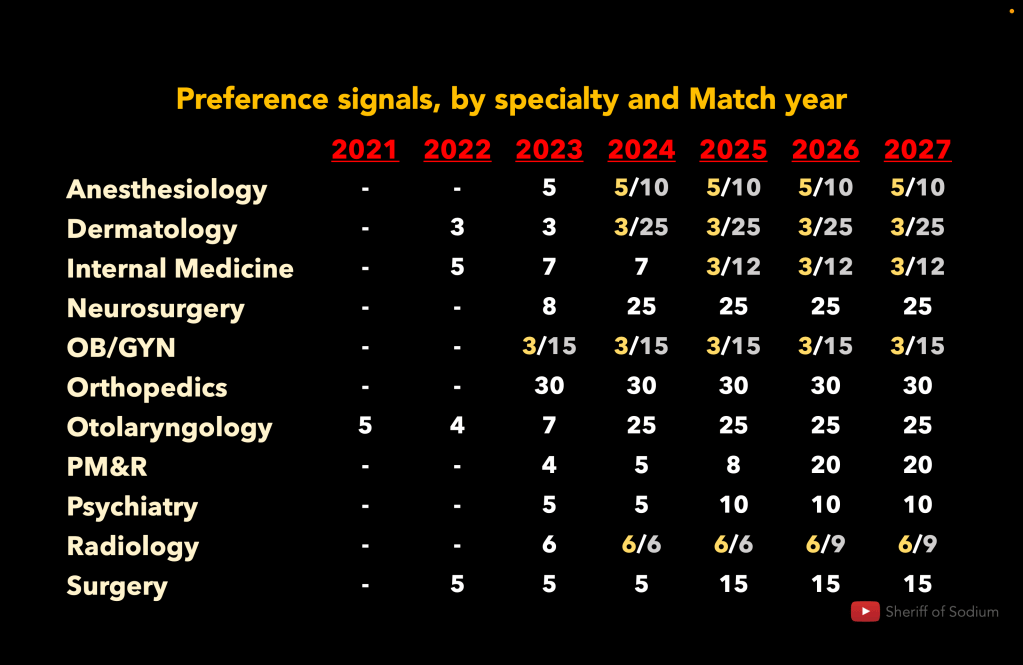
Over time, there have been trends toward specialties allowing larger signal numbers and moving to tiered (gold/silver) signaling systems.
–
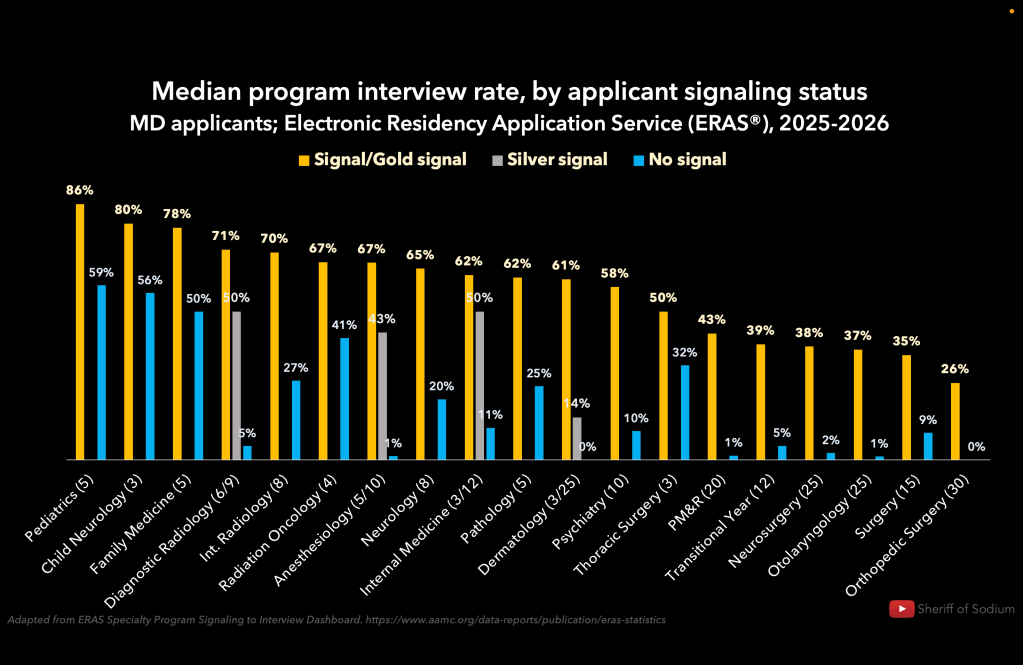
Applicants who signal are more likely to be offered an interview than applicants who don’t.
–
A signal’s value is a function of the value of a particular interview to that applicant, and of the change in probability of receiving an interview that the signaling provides.
–
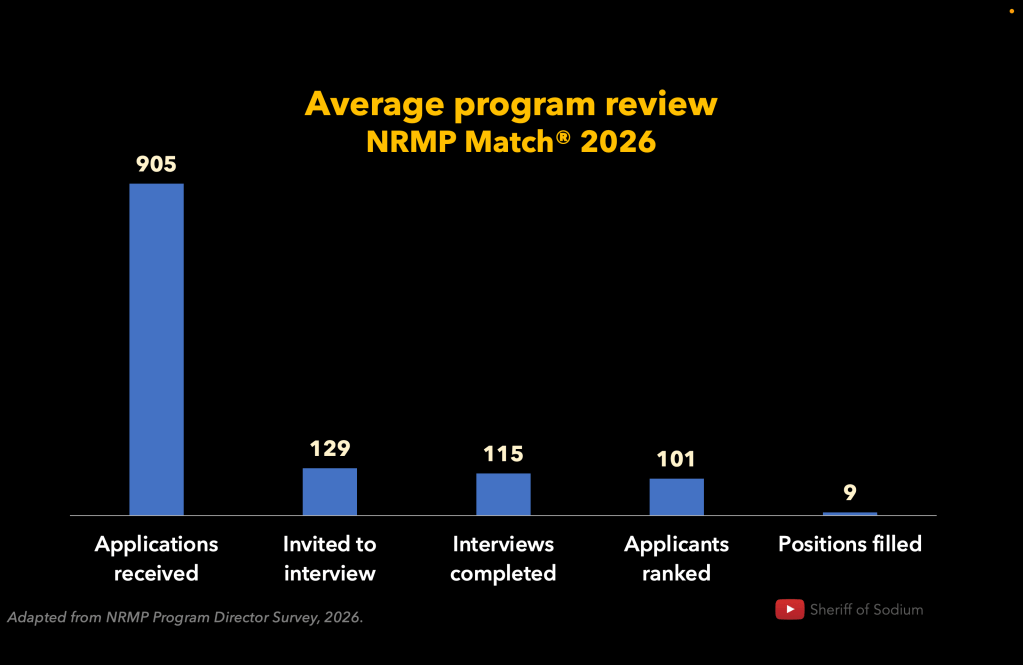
The application-to-interview transition is the narrowest wicket through which successful applicants must pass. Applicants who interview are very likely to be ranked.
–
From an applicant’s standpoint, the Match is a zero-sum game.
–
If your signaling strategy results in you getting something you don’t want, you didn’t game the system – you gamed yourself.
–
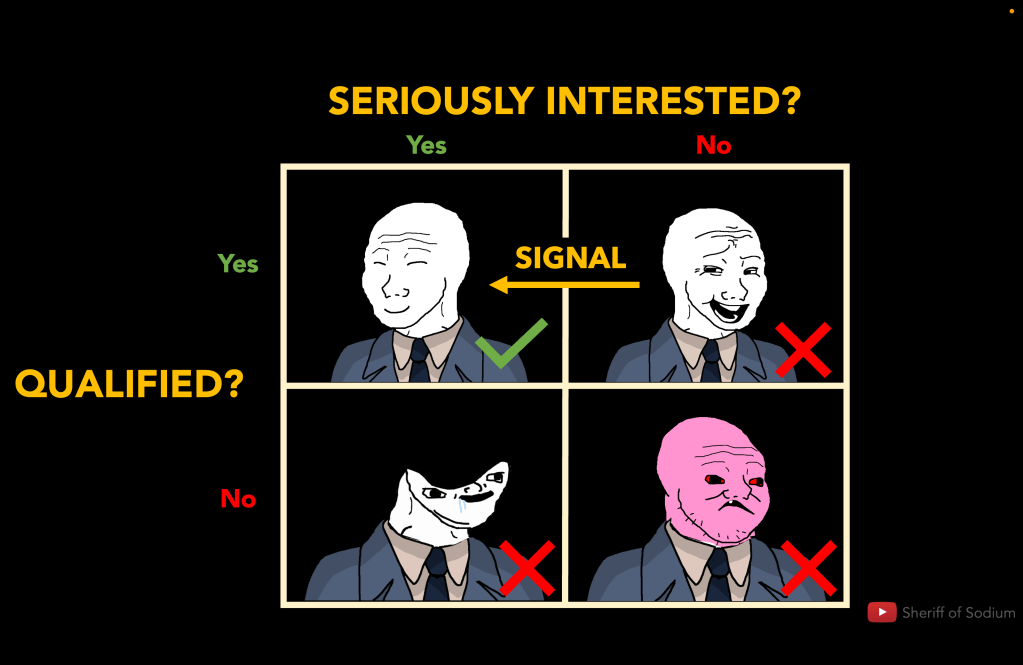
Signals do not change your qualifications – only the program’s understanding of your interest in the program.
–
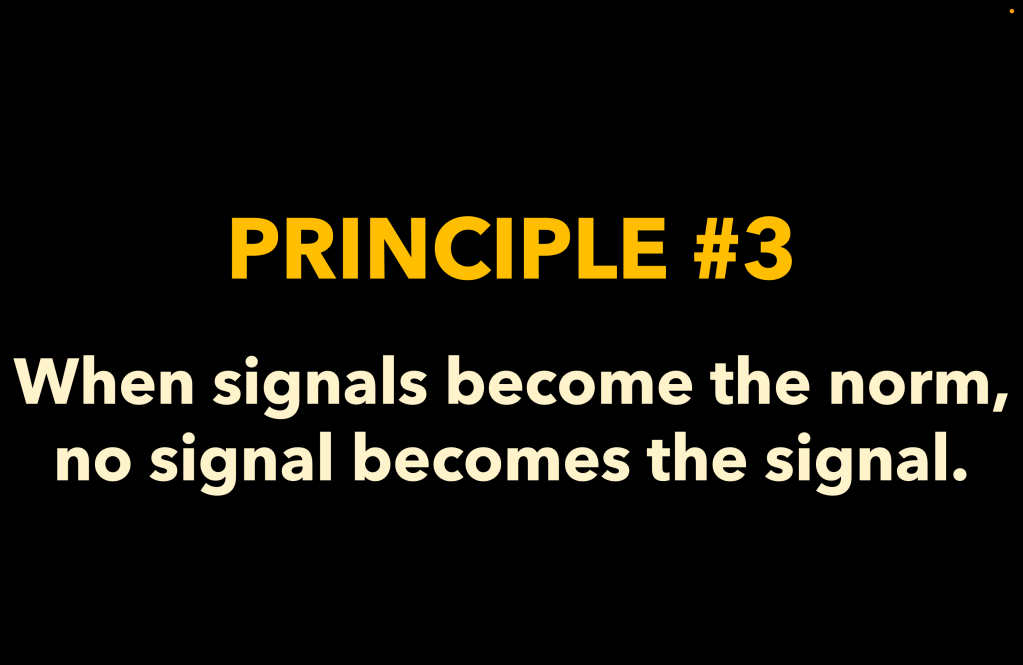
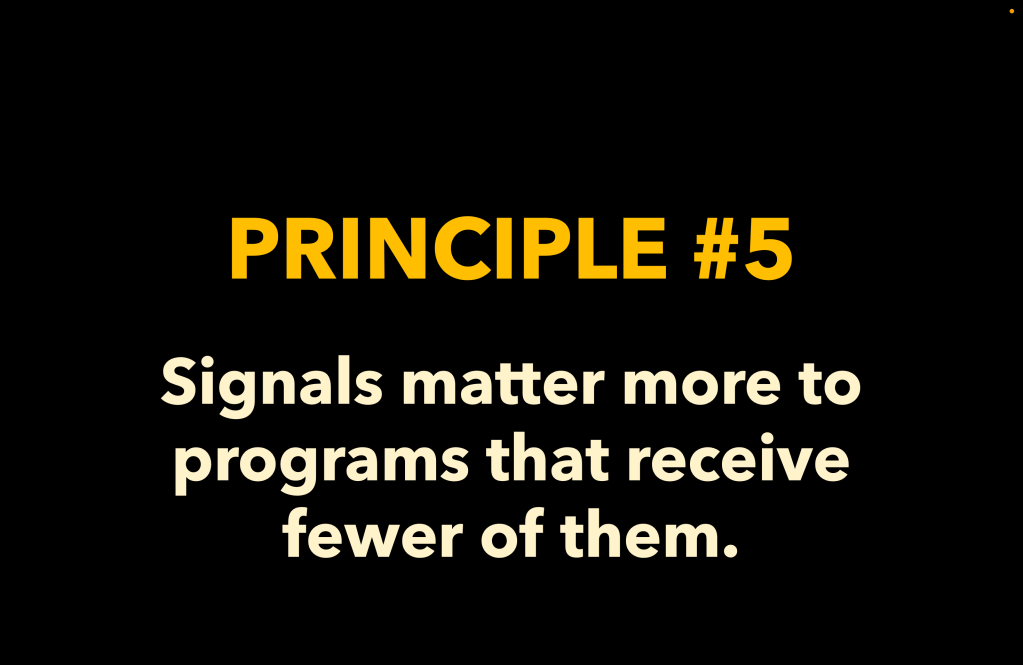
Many programs – including most programs in “Big Signaling” specialties and the most sought-after programs in specialties with lower signal numbers – receive so many signals that they can focus exclusively on those applicants.
–
Population data apply to you only when you look like the population, Interpret statistics with caution.
–
The kind of program that appeals to one applicant is very likely to appeal to many applicants. You get a signal boost if you zig when others zag.
–
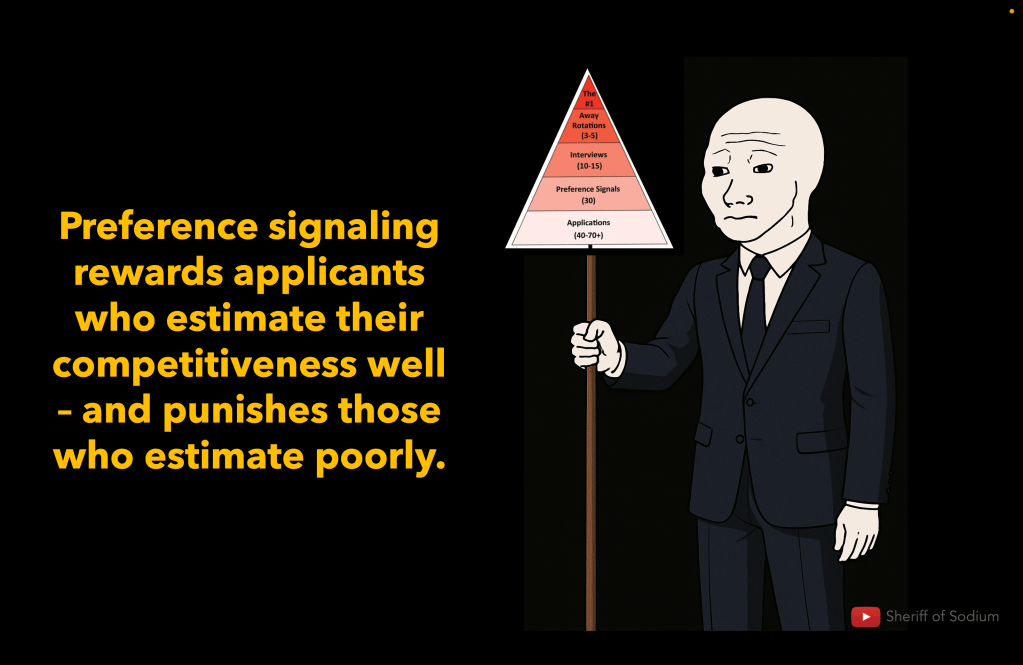
Optimal signaling requires an honest assessment of where you fall in the universe of applicants.
–
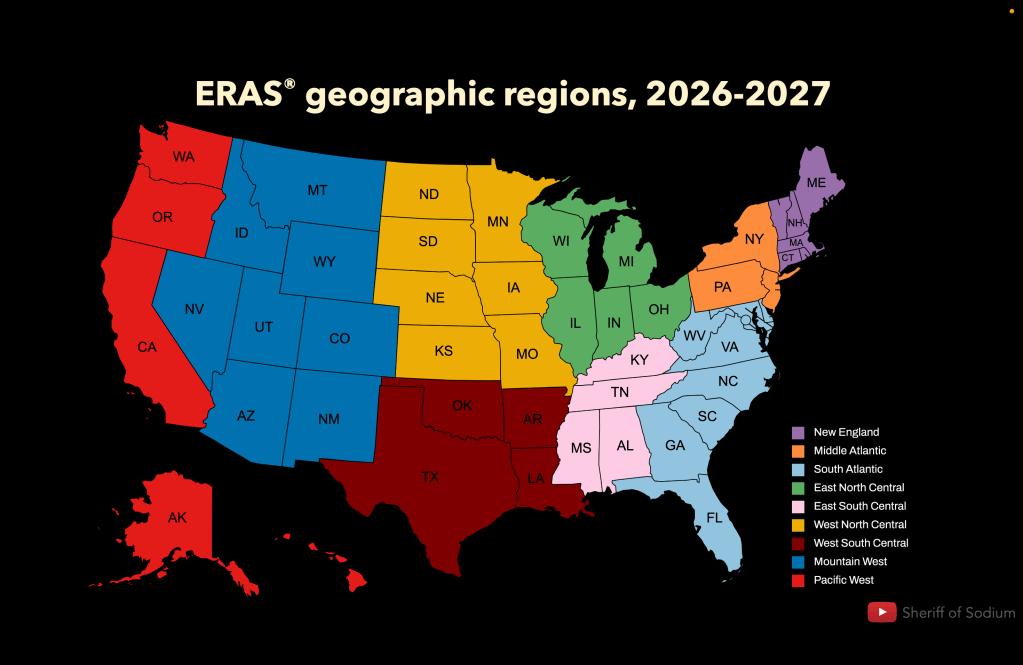
Many specialties allow applicants to designate geographic regions of interest… though the value of this kind of signaling is likely marginal for almost all applicants.
–
Applying to a backup specialty – and availing yourself of that specialty’s preference signaling – is a key way for many applicants to cover their downside risk.