This summer, the National Resident Matching Program released updates to one of the richest datasets in all of medical education: the Charting Outcomes in the Match reports.
This year, we got four new reports: one for graduating U.S. MD students, one for graduating DO students, and one each for international medical graduates of the U.S. citizen and non-U.S. citizen variety. All told, it’s over 1000 pages of charts, figures, and Match statistics… so I don’t even need to tell you what time it is.
You don’t even need to look at your watch.
You can just click right here, because you already know: it’s time to break it down, Winners & Losers™️ style.
(Running time 48:30)
–
Some teasers…
Match rates in diagnostic radiology were up for applicants of all educational backgrounds, making radiology applicants one of the cleanest specialty-level winners.
–
Match rates in psychiatry were also up for all applicant types, continuing the general upward trend since the “Is psychiatry becoming the new dermatology?!?” nadir c. 2018.
–
Surgical specialties remain highly competitive…
–
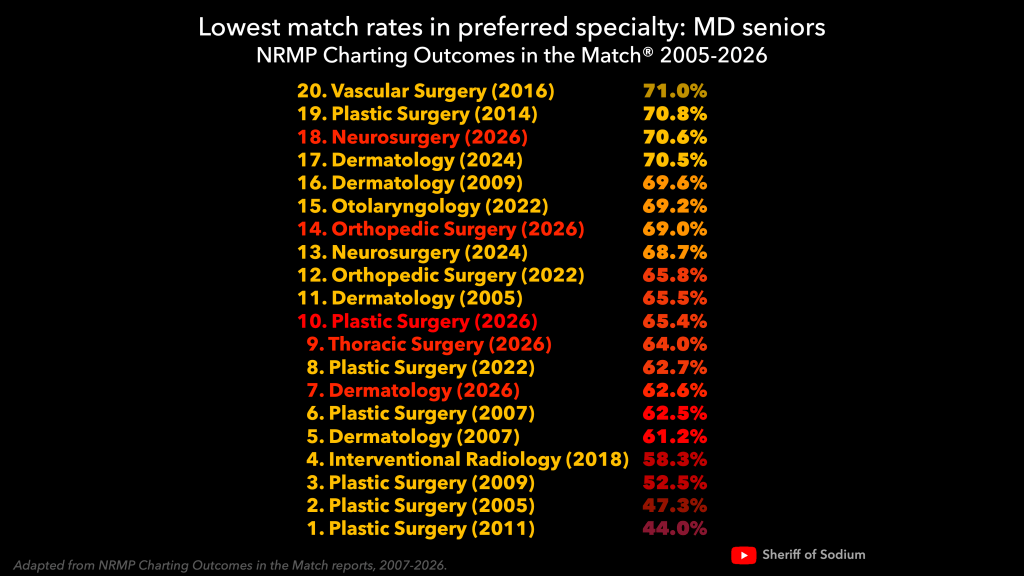
So competitive, in fact, that of the 20 most competitive specialty matches of the Charting Outcomes era, five occurred in 2026.
–
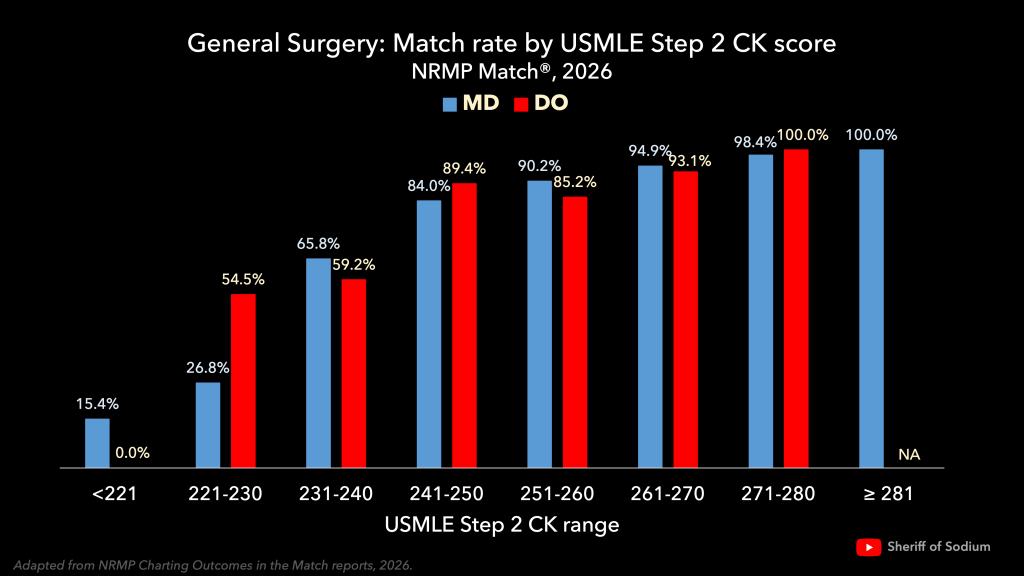
USMLE Step 2 CK scores remain a key determinant of match success…
–
But as Step 2 CK scores rise higher, scores have become compressed over a more narrow range – making it harder for programs to discriminate applicants with USMLE scores.
–
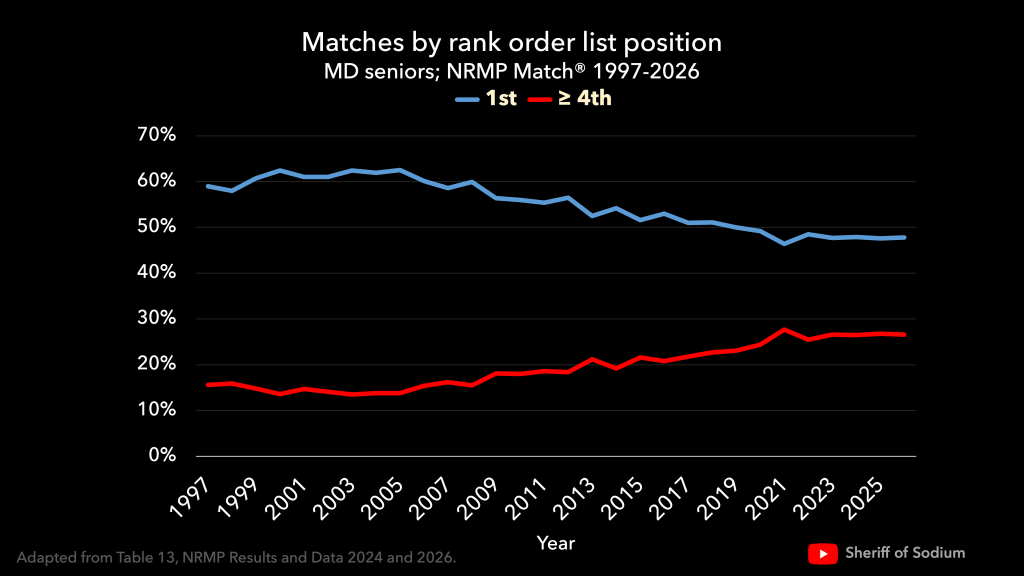
There has been a slow and steady decline in the proportion of graduating medical students who match to their first-choice program – and a rise in the proportion who match to a program they had ranked fourth or lower. But over the past 5 years, things have stabilized.
–
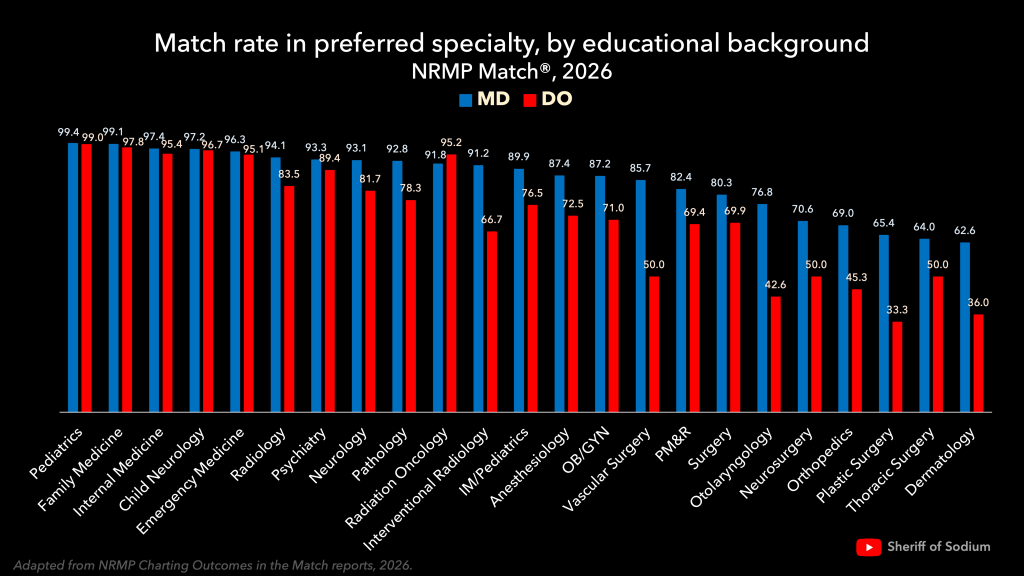
There are differences between MD and DO match rates – and the more competitive the specialty, the greater the disparity.
–
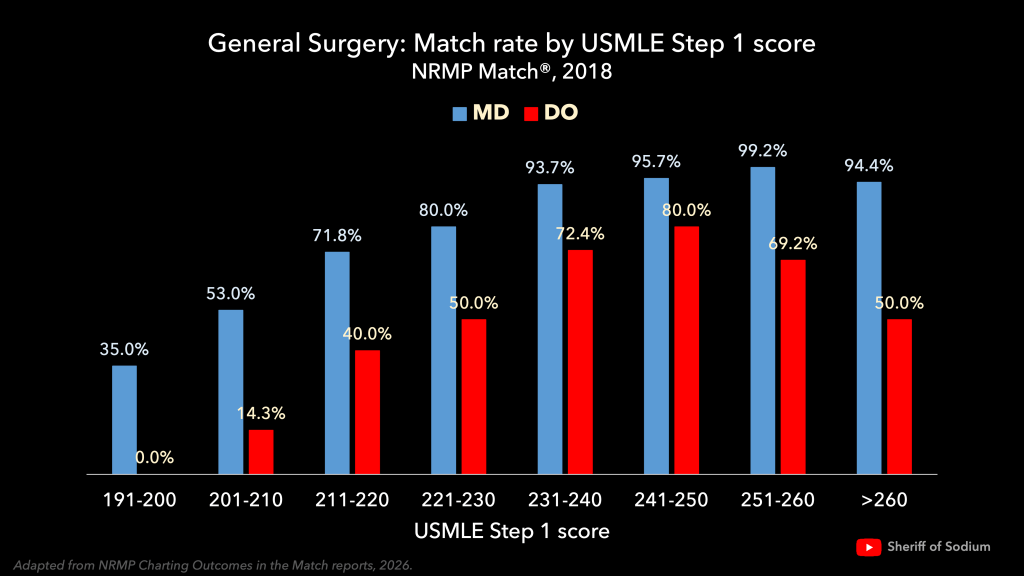
But there are also systematic differences in objective metrics between MD and DO applicants. When you examine match rates within the same USMLE score range, MD and DO match rates are similar. But things didn’t always look this way. (And they still don’t look that way for IMGs.)